Coastal Road Trip from Tulum: The Complete Guide
Few drives on Mexico’s Caribbean coast pack as much wonder into a single highway as the Riviera Maya corridor stretching from Tulum. Whether you head north toward Playa del Carmen and Cancun or south toward the UNESCO biosphere of Sian Ka’an and the dreamy lagoon of Bacalar, a coastal road trip from Tulum puts turquoise Caribbean waters, ancient Mayan ruins, and hidden cenotes right outside your window. This guide covers both directions — with everything you need to plan an unforgettable journey along the coast.

Why Tulum Is the Perfect Road Trip Base
Tulum sits at a uniquely strategic point on the Quintana Roo coast — roughly 130 km south of Cancun and at the northern gateway to the vast Sian Ka’an biosphere reserve. That position makes it the ideal launchpad for both northern Riviera Maya day trips and deeper southern explorations toward Bacalar and the Costa Maya.
The town itself is far more than a waypoint. Tulum’s Zona Hotelera (the beach hotel strip) offers some of the most photographed Caribbean shoreline in Mexico, while Tulum Pueblo hums with taco stands, night markets, and colectivo stops. The artsy Aldea Zama and bohemian La Veleta neighborhoods fill in the picture. Many travelers find they keep returning to base here between day trips — and honestly, that’s a great strategy.
Getting a Vehicle
Several car rental agencies operate in Tulum, and rates along this stretch tend to be competitive. A compact SUV or a sturdy sedan handles Federal Highway 307 (the main Riviera Maya artery) comfortably; the road is well-paved for the core route, though some detours toward remote cenotes or the Sian Ka’an reserve involve unpaved tracks where higher clearance helps. Scooter rentals are popular for short hops within Tulum and to nearby cenotes. Colectivos (shared vans running along Hwy 307) offer an inexpensive alternative for stops between Tulum and Playa del Carmen.
Road Conditions & Safety Basics
- Highway 307 is well-maintained, lit in urban sections, and safe during daylight hours.
- Drive during the day — avoid night driving on stretches between towns.
- Topes (speed bumps) appear suddenly before villages and resort entrances; slow down through every settlement.
- Keep fuel topped up — gas stations are present in main towns but scarcer in remote southern sections.
- Cell service can be patchy near Sian Ka’an; download offline maps before departing.
- Keep a copy of your vehicle documents and ID accessible at all times.
Heading North: Tulum to Playa del Carmen, Akumal & Beyond
The northern route along Highway 307 is one of the most rewarding day-trip corridors in the Yucatan Peninsula. Turquoise Caribbean coves, sea turtle bays, colonial towns, and world-class cenotes line the road in quick succession.
Highlights Along the Northern Route
Akumal — Wild Sea Turtles in the Water
Just 30 minutes north of Tulum, Akumal Bay is one of the few places in the world where you can snorkel alongside wild green sea turtles year-round — no luck required. These gentle creatures feed on the sea grass in the shallows right off the public beach. Arrive early (before 9 a.m.) to beat the crowds and enjoy calmer, clearer water. A guided Akumal Sea Turtle Snorkel tour ensures you get expert guidance on respectful wildlife interaction.
Gran Cenote & the Cenote Circuit
Just a few kilometres west of Tulum town sits the legendary Gran Cenote — a vast open-air sinkhole of crystal-clear freshwater where stalactites dip into the water and small turtles drift past snorkellers. Pair it with Cenote Dos Ojos (famous for cave diving and its “Barbie Line” of gin-clear water) and Cenote Jardín del Edén (a jungle-fringed swimming hole beloved by families) for a full cenote day. A guided Cenote Tour from Tulum handles transport and entry to multiple sites in one comfortable trip.
Playa del Carmen
About 45 minutes north of Tulum, Playa del Carmen is the liveliest town on the Riviera Maya. Quinta Avenida (Fifth Avenue) — a pedestrian-only strip of boutiques, restaurants, and street food — is the Caribbean equivalent of a lively paseo. It’s a great half-day stop for shopping, lunch, or catching the ferry to Cozumel island for world-class coral reef diving.
Bird Watching in the Mangroves
The mangrove lagoons along the coast between Tulum and Playa del Carmen host extraordinary bird life — roseate spoonbills, frigatebirds, and dozens of heron species. Dedicated Bird Watching in the Lagoon tours operate from Tulum and often venture into these coastal wetlands.
Northern Route Snapshot
Destination Distance from Tulum Approx. Drive Time Highlight Gran Cenote ~4 km west ~10 min Snorkelling, cave system, turtles Akumal Bay ~30 km north ~30 min Wild sea turtles year-round Playa del Carmen ~65 km north ~45 min Quinta Avenida, Cozumel ferry Cancun ~130 km north ~1 hr 30 min Airport hub, Isla Mujeres ferryHeading South: Tulum to Sian Ka’an, Felipe Carrillo Puerto & Bacalar
The southern route is where the Riviera Maya fades and something wilder begins. Beyond the Tulum Zona Hotelera, the road enters the buffer zone of the Sian Ka’an UNESCO Biosphere Reserve — one of Mexico’s largest protected areas — before eventually reaching Bacalar, a freshwater lagoon known as the “Lake of Seven Colors.”
Sian Ka’an Biosphere Reserve
Declared a UNESCO World Heritage Site, Sian Ka’an (which means “Origin of the Sky” in Mayan) encompasses over 600,000 hectares of tropical forest, mangroves, lagoons, and a portion of the Mesoamerican Barrier Reef. Howler monkeys, jaguars, manatees, crocodiles, and hundreds of bird species call it home. A guided Sian Ka’an Tour from Tulum is the most rewarding way to explore the lagoon channels and spot wildlife — navigating by boat through the mangrove labyrinth is as atmospheric as any journey on this coast.
Casa Cenote & the Southern Cenotes
Before entering the Sian Ka’an zone, Casa Cenote (also called Manatee Cenote) sits right where fresh underground river water meets the Caribbean — a unique brackish transition zone where you can snorkel between the jungle and the sea. It’s one of the more unusual cenote experiences in the region and very easy to access by car from Tulum Pueblo.
Bacalar — The Lake of Seven Colors
About three hours south of Tulum, Bacalar is one of Mexico’s most jaw-dropping natural spectacles. The shallow freshwater lagoon refracts sunlight into seven distinct shades of turquoise and blue. Travelers who make the drive invariably wish they had budgeted more time here. Take a sailboat tour of the lagoon, kayak through the jungle channels, and watch the sunset from the colonial fort. Many road trippers use Bacalar as an overnight stop before returning north.
Southern Route Snapshot
Destination Distance from Tulum Approx. Drive Time Don’t Miss Casa Cenote ~17 km south ~20 min Brackish cenote, jungle-sea junction Sian Ka’an (boat entry) ~25 km south ~30 min boat UNESCO lagoons, wildlife, mangroves Felipe Carrillo Puerto ~100 km south ~1 hr 20 min Mayan history, local market Bacalar ~225 km south ~3 hrs Seven-color lagoon, sailboats, fortInland Detours Worth Every Kilometer
A road trip from Tulum isn’t just about the coastline — the interior holds some of the most extraordinary Mayan archaeological sites on the peninsula, all within striking distance of Tulum as day trips or short detours.
Cobá Ruins
About 45 minutes west of Tulum, Cobá is a massive ancient Mayan city buried in dense jungle. The Nohoch Mul pyramid — still climbable — rises above the forest canopy for views stretching to the horizon. The site is linked by stone causeways (sacbeob) and feels far more adventurous and less crowded than Chichén Itzá. A dedicated Cobá Ruins Tour combines the ruins with a cenote stop for a perfect full-day experience.
Tulum Ruins
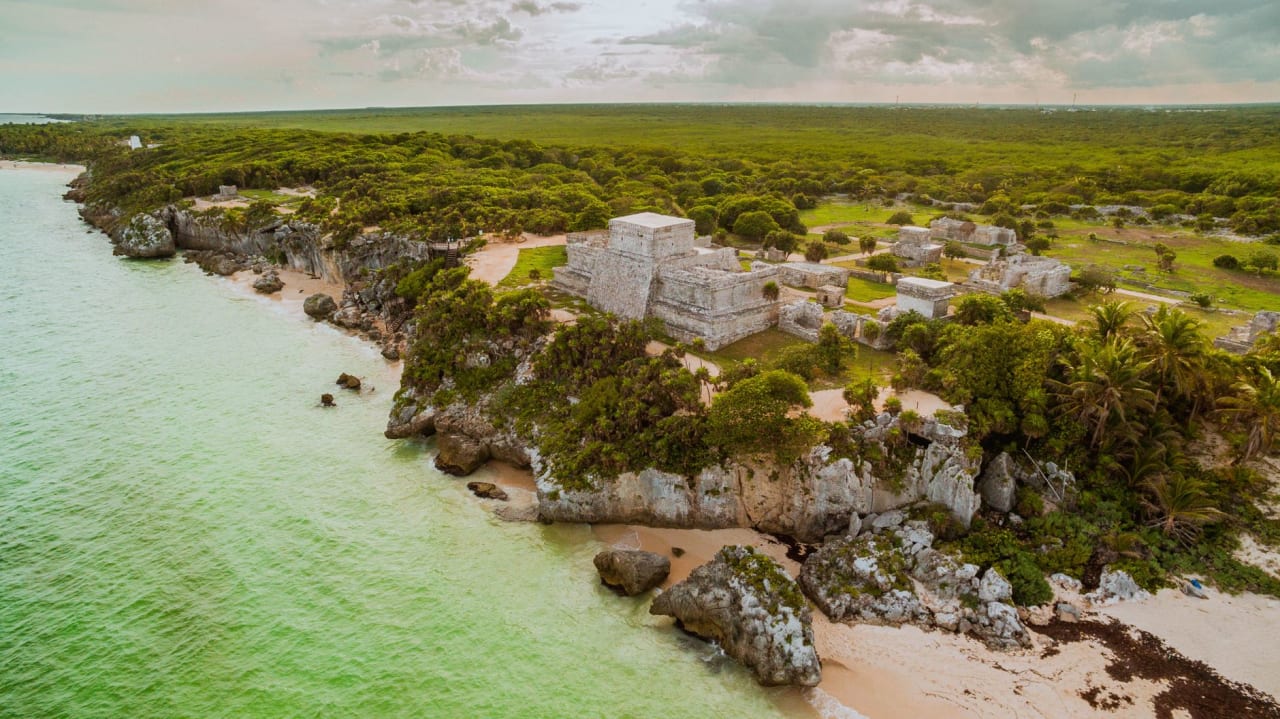
The Tulum archaeological zone — a fortified Mayan city dramatically perched on a cliff above the Caribbean — is one of the most iconic sites in the entire Yucatan. The views of the turquoise water below the castillo pyramid are genuinely stunning. Visit early (gates open at 8 a.m.) to beat the cruise-ship crowds. The small Playa Ruinas beach beneath the ruins is one of the most beautiful swimming spots in Tulum.
Chichén Itzá
The most famous Mayan ruin in the world sits about 2.5 hours west of Tulum on the Yucatan Peninsula. El Castillo pyramid (Temple of Kukulcán) is one of the New Seven Wonders of the World. It’s a long but absolutely worthwhile full-day excursion — our team recommends booking a guided tour to get the most from the experience and avoid the midday heat.
Best Experiences to Add to Your Road Trip Itinerary
A road trip from Tulum isn’t just about the drive — it’s about layering in experiences that would be impossible anywhere else. Here are some of the most memorable additions, bookable from Tulum:
- Cenote Tour — Explore multiple cenotes in a single guided trip: Gran Cenote, Dos Ojos, Cenote Azul, and more. The underground river systems here are among the most spectacular in the world.
- Sian Ka’an Biosphere Tour — Navigate the UNESCO-protected lagoon channels by boat, spot wildlife, and float down a Mayan canal — one of the most otherworldly natural experiences on this coast.
- Sea Turtle Snorkel at Akumal — Swim alongside wild green sea turtles in their natural habitat — a genuinely moving wildlife encounter suitable for all ages.
- Sunset Horseback Riding — Ride along the Caribbean beach or through the jungle at golden hour — a beautiful way to end a day on the road.
- Cobá Ruins & Cenote Tour — Combine ancient Mayan archaeology with a refreshing cenote swim in one full-day excursion from Tulum.

“We rented a car for five days and used Tulum as our base. Day one we went to Gran Cenote and Dos Ojos — the underwater light was surreal. Day two we drove south to Sian Ka’an; floating down the Mayan canal was unlike anything we’d ever done. On day three we visited Akumal and swam with turtles. Day four was Cobá in the morning and Tulum ruins at sunset. By the time we left, we felt like we’d lived here for a month.”
— Sofía R., Mexico City
Practical Road Trip Planning Tips
Best Time to Go
The dry season — roughly November through April — offers the most reliable driving conditions and calmest Caribbean waters. The rainy season (June to October) brings lush jungle and fewer crowds, but afternoon downpours are common and some back roads to cenotes can flood. December through March is peak season; book accommodation in advance if traveling then.
What to Pack for the Car
- Reusable water bottles (fill up in towns; hydration is critical in the heat)
- Sunscreen and insect repellent
- Cash in pesos — some cenotes, beach clubs, and small vendors don’t accept cards
- A portable phone charger
- Light layers for air conditioning and cool evenings
- Snorkelling gear (saves rental fees at multiple stops)
- A basic first-aid kit
- Offline maps (Maps.me or Google Maps offline downloads) — essential near Sian Ka’an
Accommodation Tips
Tulum has the widest range of accommodation — from eco-chic boutique hotels in the Zona Hotelera and Aldea Zama to budget-friendly guesthouses in Tulum Pueblo. Using it as a base and doing day trips is often the most convenient approach, particularly if you’re renting a car for the whole duration. Bacalar and Playa del Carmen also have excellent places to stay if you want a night in each direction.
Road Trip Length Guide
Trip Length Recommended Focus 1–2 days One direction only (north to Akumal/Playa del Carmen or south to Sian Ka’an) 3–4 days Both directions with cenote day and inland ruins 5–7 days Full exploration of both routes plus Cobá, Chichén Itzá, and Bacalar overnight 7 days Deep immersion: cenotes, ruins, wildlife, beach, Bacalar — the complete Riviera Maya
Frequently Asked Questions
Is it safe to drive Highway 307 along the Riviera Maya?
Yes — Federal Highway 307 between Cancun and Tulum is considered safe for travel during daylight hours. Standard precautions apply: drive during the day, keep valuables out of sight, and check current conditions with your accommodation before setting out. The Mexico Tourism Board and SCT (Secretaría de Comunicaciones y Transportes) provide updated road condition information.
Do I need a 4×4 vehicle for this road trip?
For the main Highway 307 route and most cenote access roads, any vehicle is fine. If you plan to venture deep into the Sian Ka’an reserve or toward very remote back-road cenotes, a vehicle with higher ground clearance (compact SUV) is helpful, especially after rain.
How far is Bacalar from Tulum?
Bacalar is approximately 225 km south of Tulum, about a 3-hour drive. It’s best done as an overnight trip rather than a day trip — one night there is absolutely worth it.
Can I visit Sian Ka’an as a day trip from Tulum?
Yes, and it makes for an excellent full day. The entrance to the biosphere is about 30 minutes south of Tulum Pueblo. Allow at least 6–8 hours total to do the lagoon boat tour properly. A guided Sian Ka’an Tour handles all logistics including the boat.
What’s the best sunset spot on the coastal road trip?
The clifftop Tulum archaeological zone offers one of the most dramatic sunset views on the Caribbean coast — ancient Mayan temples silhouetted against the turquoise sea. Alternatively, the wooden palapa bars along the Zona Hotelera beach road are legendary for sundowners with sea views. For the southern route, Bacalar’s lagoon at sunset is absolutely unforgettable.

Are there tolls on Highway 307?
The main section of Federal Highway 307 between Cancun and Tulum does not have toll booths. Some connecting roads and bypass routes in other parts of Quintana Roo do have tolls. Verify with your rental agency at time of pick-up.
Hit the Road — The Caribbean Coast Is Calling
A coastal road trip from Tulum is one of those travel experiences that stays with you long after the tan fades. Between the cenotes, ancient ruins, wildlife encounters, and turquoise Caribbean vistas, every kilometer of Highway 307 — and every detour off it — has something worth slowing down for. Whether you spend one day exploring north toward Playa del Carmen or five days looping south through Sian Ka’an and Bacalar, you’ll come back to Tulum with a far deeper appreciation for just how extraordinary this stretch of Mexican coastline really is.

Disclaimer: Information may change; please confirm schedules, regulations, and availability before booking. For legal, environmental, or safety matters, consult local authorities or official sources. For the most up-to-date tour availability, visit our reservations page.
Useful Official Resources
- Mexico Tourism Board — Visit Mexico
- SCT — Secretaría de Comunicaciones y Transportes (Road Info)
- CONANP — Sian Ka’an Biosphere Reserve
Follow us for travel inspiration from the Caribbean coast:
auto_awesome Continue exploring Tulum
You Might Also Like
 article Adventures calendar_today Jan 6, 2026
 Best Day Trips from Tulum: Cenotes, Ruins & Hidden Caribbean Treasures
Tulum is more than turquoise Caribbean waters and eco-chic jungle hotels—it’s your launchpad for some of the Yucatan Pen
article Adventures calendar_today Dec 27, 2023 Beyond the Beach: Best Day Trips from Tulum
Hi there, it's Sophia! Just when I thought I'd seen all the wonders of Tulum, the temptation to explore further pulled m
article Exploring calendar_today Oct 11, 2021 How to Go from Tulum to San Cristóbal de las Casas
Although Tulum — with its turquoise Caribbean waters, cliff-top Mayan ruins, and lush cenotes — is one of the most sough