Dolphins in Tulum: When to See Them & How to Book (2026 Guide)

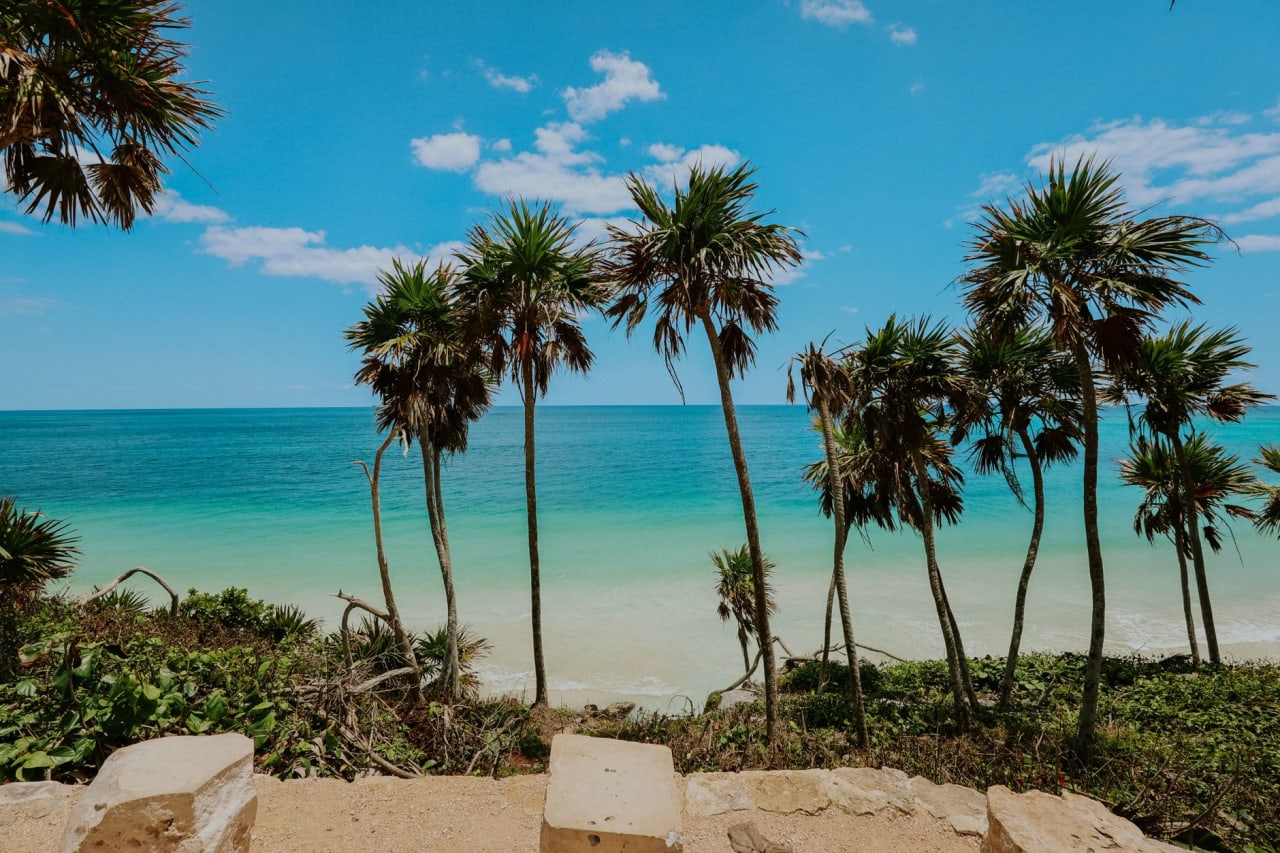
At 7 AM off the turquoise Caribbean coast of Tulum, the sea is mirror-flat and the morning light filters gold through the palms. Then the first fin breaks the surface — then ten more — and the entire pod launches into the air in synchronized spirals, arcing over your boat close enough to feel the spray. This is what a dolphins tour in Tulum looks like on a typical morning. Here is every detail you need: the species, the seasons, the itinerary, what to pack, and how to book.
What Dolphins Live Off Tulum?
Three species are reliably seen on a dolphin watching tour in Tulum, with a seasonal bonus for those visiting at the right time of year:
- Spinner dolphins (Stenella longirostris) — the main attraction. Pods of 20 to 200+, famous for launching into aerial spins of up to seven full rotations. They feed in the warm Caribbean waters every morning before retreating to deeper water to rest at midday.
- Pantropical spotted dolphins (Stenella attenuata) — smaller and faster, often seen riding the wake of the boat. Distinctive white-tipped beaks and spotted flanks.
- Common dolphins (Delphinus delphis) — less frequent, but spectacular when encountered; they sometimes superpod in groups of hundreds.
- Humpback whales (Megaptera novaeangliae) — November through March, as they migrate through Caribbean waters. Tours depart from the Tulum coast and coordinate with captains farther north toward Cancún and Isla Mujeres where sightings are most concentrated. Breaching and fin-slapping are common when encountered.

When Is the Best Time for Dolphin Watching in Tulum?
The short answer: dolphins are present every month of the year. Unlike whale sharks or whale watching seasons, spinner dolphins do not migrate — the same families live and feed in these Caribbean waters year-round. There is no month when you will not find dolphins here.
That said, conditions vary significantly by season:
- November – April (dry season) Best conditions: The Caribbean Sea is calmer, visibility is better, and swells are lower. The boat ride is smooth enough for non-swimmers and young children. Humpback whale sightings are possible November through March — this is the premium season for combined wildlife.
- May – October (rainy season) Still great: Dolphin sightings remain excellent. The sea is more active — swells are higher and the ride can be bumpier — but many guests love the dramatic scenery of storm-lit mornings over the Caribbean. Tours run on good weather days only.
The single best month for combined dolphin + whale sightings is January: dry season calm, peak humpback migration window, and the lowest chance of weather cancellations.

Where Dolphins Are Found — and Why You Need a Boat
Spinner dolphin pods feed in the offshore waters 2–5 km from Tulum's Zona Hotelera coastline, in depths beyond the shallow reef shelf. They follow small fish schools that concentrate near the surface at dawn. By 10 AM the pods disperse to rest in deeper water — which is exactly why the dolphin watching tour in Tulum departs at 7 AM.
You cannot reliably spot dolphins from the beach. The only way to encounter them is aboard a traditional panga with a local captain who has been reading these Caribbean waters for decades. Departures are from Tulum Beach (Playa Paraíso area), just south of the iconic Mayan ruins on the clifftop — one of the most beautiful boat launch settings in Mexico.
Full Itinerary: What to Expect on the Dolphins Tour
The dolphins tour Tulum runs 3 hours, departing from the beach in the Zona Hotelera near Playa Paraíso:
- 6:45 AM — Meeting point: Gather at the boat launch on Tulum Beach. Your guide gives a safety and wildlife briefing, including recent sightings from the morning's first boats. Life jackets are distributed.
- 7:00 AM — Coastal run: Head north along the coastline, passing below the dramatic Tulum Mayan ruins perched on their limestone cliff above the turquoise sea. Green sea turtles are often visible close to the coral reef in these shallow waters.
- 7:30 AM — Open water: Reach the offshore feeding zone. The captain cuts the engine. Within minutes, spinner dolphin pods close in — they are curious about boats and will often surf the bow wake, swim under the hull, and leap alongside for extended periods.
- 8:30 AM — Return along the coast: The captain keeps one eye on the water for additional encounters. On clear days the view of Tulum's Zona Hotelera from 3 km offshore — the jungle canopy, the white sand beach, the ruins on the cliff — is worth the trip on its own.
- 9:30–10:00 AM — Back at Tulum Beach: Arrive back with time for a late breakfast. The Zona Hotelera has excellent breakfast spots, or head into Tulum Pueblo for taco stands that open early.
The Full Wildlife List: What Else You'll See
The dolphins tour in Tulum consistently delivers far more than just dolphins. A typical morning from the boat:
- Green sea turtles (Chelonia mydas) — surface regularly to breathe near the coral reef. The waters around Tulum and nearby Akumal are famous for wild sea turtle encounters year-round.
- Spotted eagle rays — glide in V-formation just below the surface, wingtips nearly touching the hull. One of the most quietly spectacular sights of the morning.
- Nurse sharks — resting on the sandy seafloor near the reef in the shallows, visible from the boat on calm mornings.
- Flying fish — erupt from the surface in silver flashes when startled by the boat, skimming 20–30 meters before re-entering the water.
- Humpback whales (Nov–Mar) — when present, they tend to be the most dramatic sight on the water. Full breaches, pec-fin slaps, and tail flukes are all common. The captains coordinate by radio when one is spotted.
- Frigatebirds and brown pelicans — often follow the dolphin pods, diving for fish that the dolphins push to the surface.

What Guests Say
"Morning boat tour was the best thing we did in Tulum. We saw a pod of maybe 30 dolphins surfing alongside the boat, the Mayan ruins from the sea, and two humpback whales in the distance. The captain knew exactly where to go."
— Daniel G., United States
"Dolphins everywhere! We had a huge pod jumping alongside the boat for what felt like 20 minutes. Seeing the ruins from the water while dolphins leap around you — I've done tours in other countries and this was by far the most surreal. The fact that they come to you instead of the boat chasing them makes it feel completely natural."
— Nina P., Netherlands
"Honestly didn't expect to see so much wildlife. Dolphins, sea turtles, a nurse shark resting on the reef, and one lucky glimpse of a humpback whale tail. Back on the beach by 10 AM with the whole day still ahead."
— Tom W., Australia
How to Book the Dolphins Watching Tour
We run the dolphins tour daily from Tulum Beach, weather permitting, with a maximum of 8 guests per boat. Small groups are non-negotiable — we will not overload a boat to fit more people.
Check Availability & Book the Dolphins Tour →Everything included in the dolphin watching tour Tulum:
- Hotel pickup and drop-off anywhere in Tulum (Zona Hotelera, Aldea Zama, Tulum Pueblo)
- 3-hour guided boat tour with a licensed local captain
- Life jackets and full safety equipment
- Light breakfast served on board
- Bilingual guide (Spanish/English)
Price: 895 MXN per person (approx. USD 45–50 depending on exchange rate). No hidden fees, no surcharges.

What to Wear & Bring
- Light windproof layer: The Caribbean at 7 AM is noticeably cooler than the midday beach. A thin zip-up or hoodie is enough — you will not need it by 8:30 AM but you will want it at departure.
- Polarized sunglasses: Reduce glare dramatically and let you see dolphins below the surface before they breach. Worth their weight in gold on this tour.
- Reef-safe sunscreen: Standard chemical sunscreens are harmful to coral reefs and sea turtles. Use zinc-based mineral sunscreen. Apply before boarding — Tulum's reefs are protected and we take this seriously.
- Water bottle: Hydration matters on open water. We provide a light breakfast, not drinks. Bring water.
- Camera or phone in a waterproof case: Sea spray is real when dolphins surface close to the boat. A dry bag or waterproof pouch is worth the 100-peso investment at any beach shop in the Zona Hotelera.
- No drones: Flying drones within 50 meters of marine mammals is prohibited under Mexican law (NOM-131-SEMARNAT). Leave it at the hotel.
Frequently Asked Questions
Are dolphin tours in Tulum ethical?
Yes. Our boat maintains a respectful distance at all times and never chases or herds dolphin pods. The dolphins approach the boat on their own terms — this is why the captain cuts the engine and drifts rather than motoring alongside them. We operate within Mexican marine wildlife regulations (NOM-131-SEMARNAT) and the captain's decades of experience on these Caribbean waters mean encounters are consistently natural and undisturbed.
Can children join the dolphin watching tour in Tulum?
The tour is suitable for all ages. Life jackets are available in all sizes including children's. We recommend it for children aged 4 and up. Note that the sea can be choppier May–October — for very young children, the November–April dry season offers the smoothest rides on the Caribbean.
What happens if no dolphins are seen?
In the rare case of no sightings (under 5% of departures over five years), we provide a discount voucher valid for a future tour. Our captains have never returned empty-handed two mornings in a row — the pods are simply always there in these waters.
Is the tour private or shared?
Our standard dolphins tour Tulum is a small shared-group tour, capped at 8 guests. If you prefer complete exclusivity, the private boat tour is available for groups of up to 10 — the same route, your own boat and captain.
What is the cancellation policy?
Tours cancelled 24 hours or more before departure receive a full refund. Cancellations within 24 hours can be rescheduled for another morning. Weather cancellations (at the captain's discretion) are always fully refunded or rescheduled at no charge.
Is there seasickness risk on the dolphins tour?
The open-water section (roughly 30–45 minutes of the 3-hour tour) is the bumpiest. If you are prone to motion sickness, take an antihistamine-based seasickness tablet (Dramamine/Bonine) the evening before and morning of. Avoid heavy meals before boarding. The November–April dry season is significantly calmer on the Caribbean than the rainy season.
Book Your Dolphins Tour in Tulum →auto_awesome Continue exploring Tulum
You Might Also Like
 article Adventures calendar_today Dec 4, 2024
 Complete Guide to Whale Watching Season Near Tulum
Humpback whales visit the warm Caribbean waters off the Yucatán Peninsula every winter. Here is everything you need to k
 article Adventures calendar_today Apr 1, 2024
 How To Spot Whales And Dolphins On An Unforgettable Tour Near Tulum
Tulum sits on the turquoise Caribbean coast of Mexico, and the surrounding waters are rich with marine life – from playf
 article Whale Watching calendar_today Mar 23, 2024
 How to Plan Your Trip for the End of Whale Watching Season Near Tulum
Humpback whale season in the waters off Mexico's Yucatán Peninsula runs November through March, and the final weeks brin