Tulum vs Cabo San Lucas: Caribbean Mystique vs Pacific Glamour
They are both in Mexico. Both offer warm water, year-round sun, and beaches that make you stop mid-step and just stare. After that, Tulum and Cabo San Lucas diverge so completely that choosing between them reveals more about what kind of traveler you are than about which destination is "better." This comparison has no absolute winner — it has winners by traveler profile.
We have been honest in both directions: there are categories where Cabo wins without argument. And there are reasons people return to Tulum year after year when they could go anywhere else. Start with the summary table, then read the sections that matter most to you.
Quick Comparison Table
| Category | Tulum | Cabo San Lucas |
|---|---|---|
| Ocean | Caribbean — turquoise, calm, warm | Pacific meets Sea of Cortez |
| Vibe | Eco-chic, wellness, spiritual, Mayan | Polished resort, American-facing |
| Beaches | White sand, calm Caribbean, reef snorkelling | Médano is swimmable; dramatic Arch backdrop |
| Unique experience | Cenotes, Mayan ruins, Sian Ka'an | World-class sport fishing, golf, Sea of Cortez |
| Snorkelling & diving | Excellent — coral reef and cenote systems | Good — Sea of Cortez marine diversity |
| Sport fishing | Limited — Caribbean not prime billfishing | World capital — true elite level |
| Food | Vegan/organic scene, jungle restaurants, tacos | International/American resort dining |
| Nightlife | Boutique jungle clubs, beach bars, intimate | Massive: Cabo Wabo, Squid Roe, clubs |
| Price | Mid-range to budget — good value | Among Mexico's most expensive |
| Accessibility | Cancun airport (CUN) — excellent connections | Direct US flights from dozens of cities |
| Best for | Cenote lovers, yogis, eco-travelers, culture | Anglers, resort honeymoons, party trips, golf |
The Setting: Two Very Different Mexicos
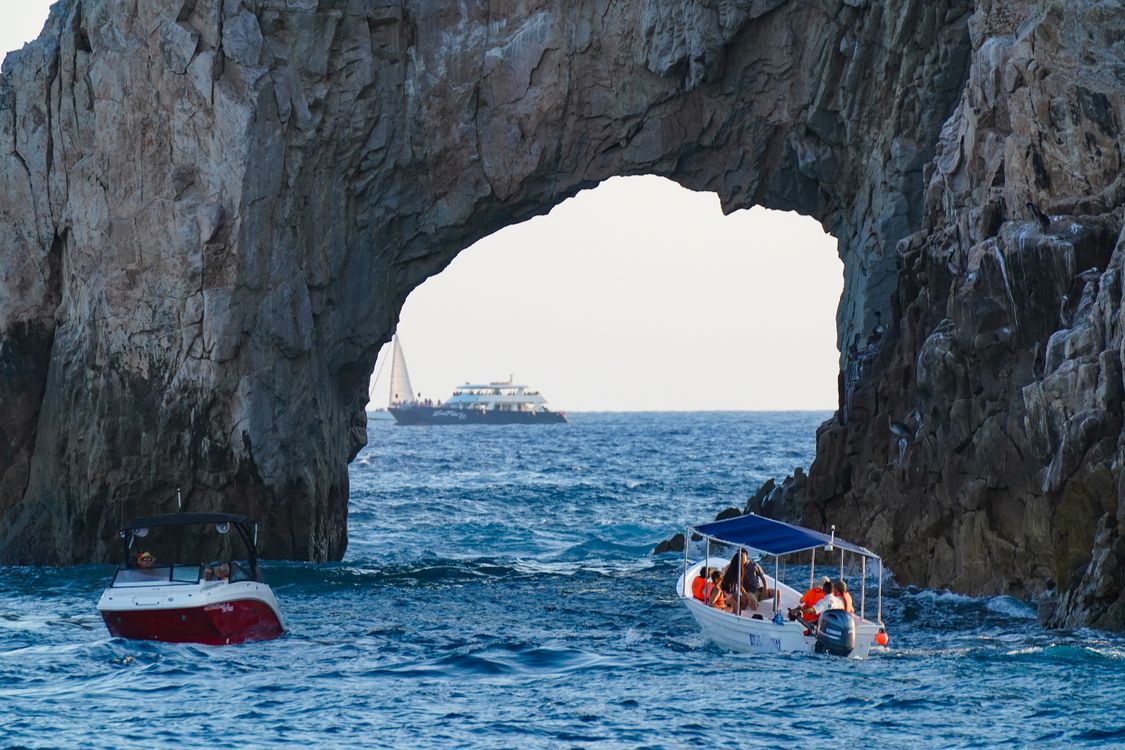
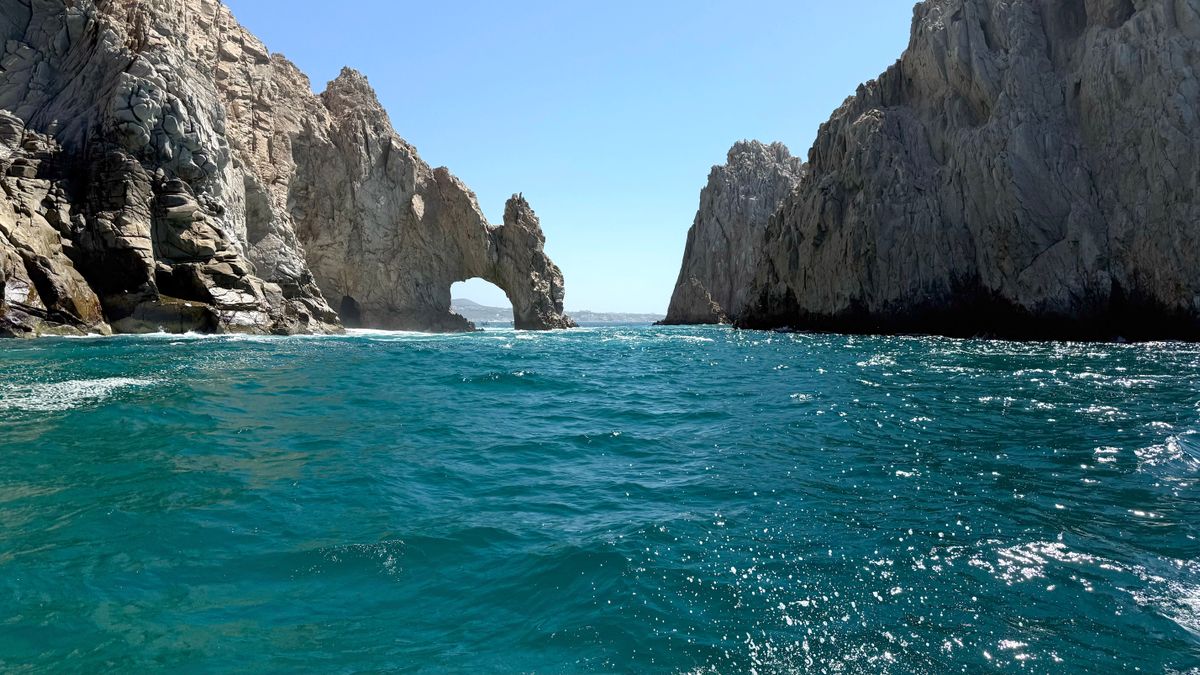
Cabo San Lucas sits at the very tip of the Baja California Peninsula, where the Pacific Ocean crashes against the Sea of Cortez in a dramatic collision of currents. This geography gave birth to the legendary Arch — El Arco — one of Mexico's most photographed landmarks, and to one of the world's great sport fishing grounds. The infrastructure that grew around this natural drama is unapologetically resort-focused: international all-inclusives, menus in English, staff fluent in dollars, and a marina strip that runs non-stop through the night.

Tulum sits on the Caribbean coast of Quintana Roo, about 130 kilometers south of Cancun along the Riviera Maya. The ocean here is the turquoise Caribbean — calm, warm, and impossibly clear. Ancient Mayan temples perch on sea cliffs above the water. Underground rivers carve a network of cenotes — freshwater sinkholes — through the jungle floor. The Sian Ka'an UNESCO biosphere reserve begins just south of town, protecting mangroves, lagoons, and wildlife across half a million hectares. This is not a destination that was designed; it evolved, drawing together wellness travelers, archaeologists, divers, and people who simply couldn't leave.
The Beaches: Caribbean Calm vs Pacific Drama
The character of the water at each destination is completely different — and it matters more than most travelers expect before they arrive.
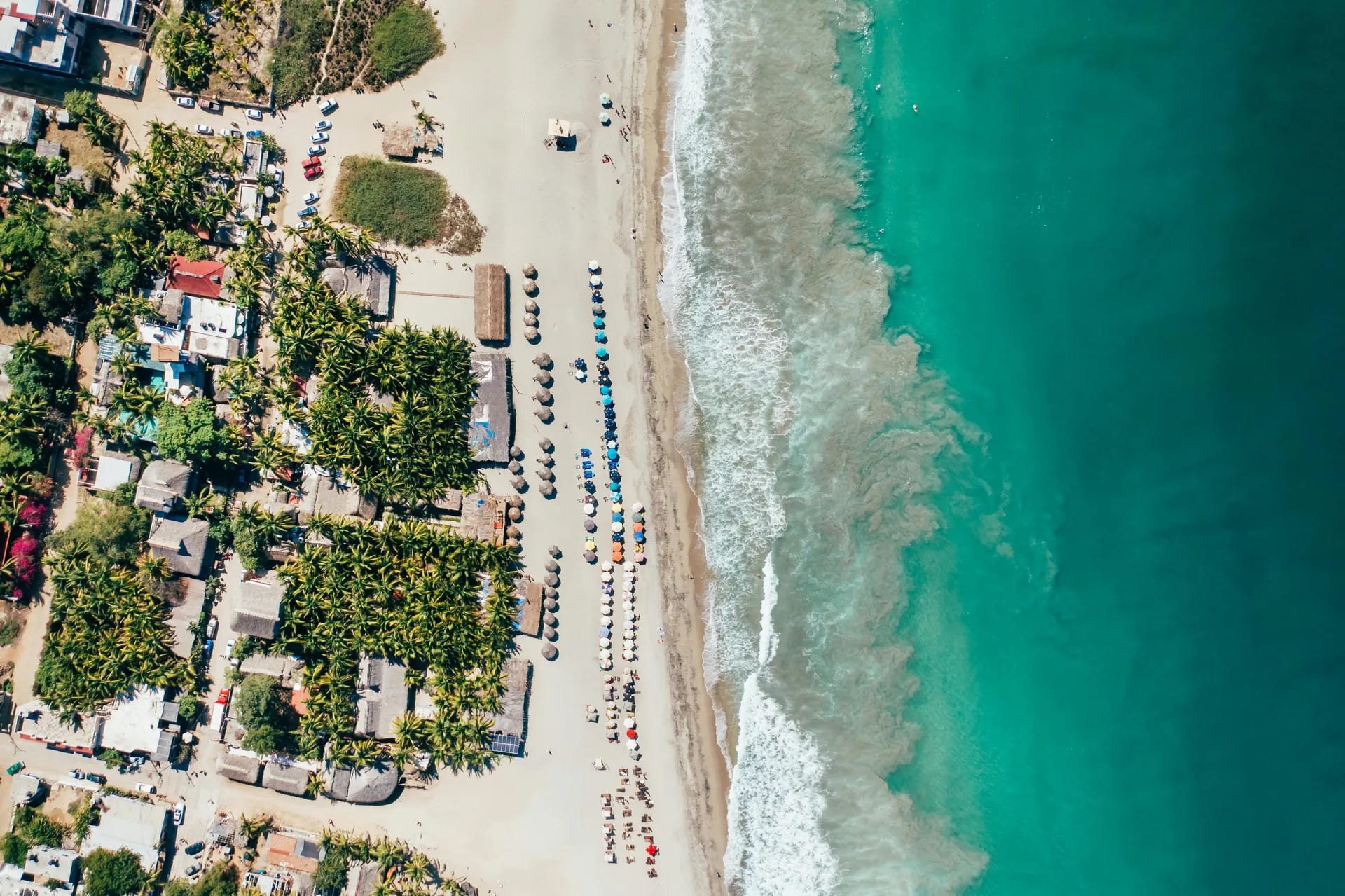
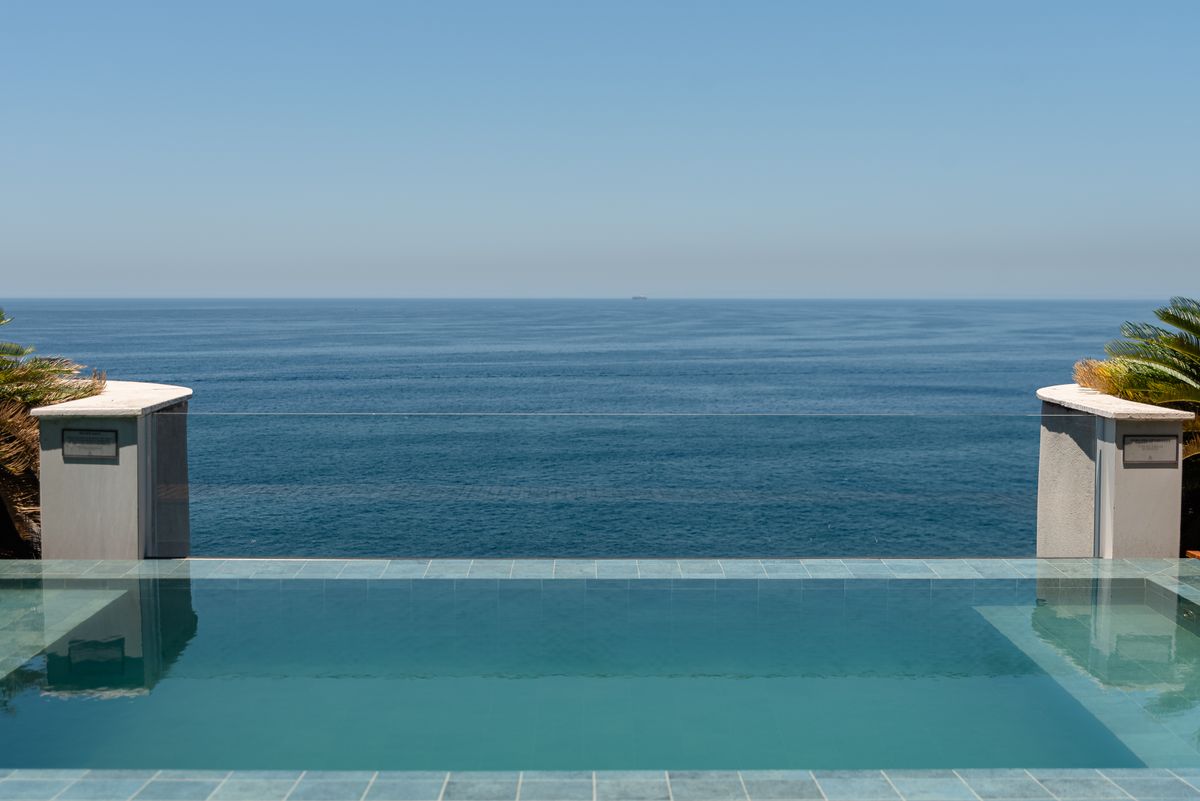
Tulum's Caribbean beaches — along the Zona Hotelera and down to Playa Paraíso — offer some of Mexico's most photogenic shoreline: white powdered sand, water that shifts from aquamarine in the shallows to deep cobalt offshore, and a coral reef just below the surface that makes snorkelling accessible directly from the beach. The waves are gentle. Families wade in. You can drift in the warm shallows for an hour without a care. And on the northern end, Playa Ruinas sits directly below the cliff-top Mayan ruins — one of the most dramatic beach settings anywhere in the Americas.
Cabo has the Arch as its visual icon — that rock formation where the Pacific meets the Sea of Cortez — and Playa Médano as its main swimming beach. Médano is sheltered and swimmable, a good beach for families. The water is bluer and cooler than the Caribbean, with more swell energy. If you want swimming without coral beneath your feet and prefer the drama of Pacific geography, Médano delivers.
Cenotes and Ruins: Tulum's Unique Cards
This is where Tulum has no competition anywhere in Mexico, and certainly not from Cabo. The cenote system of the Yucatan Peninsula is one of the natural wonders of the Americas — a vast underground network of flooded limestone caves and open sinkholes fed by freshwater springs. The water is crystalline and cool, the visibility extraordinary, and the geological formations simply unlike anything else on earth.
Within easy reach of Tulum: Gran Cenote (the most visited, with a natural archway and turtles in the water), Dos Ojos (a two-entrance cave system beloved by divers), Cenote Azul (open sky, vivid blue, very swimmable), Jardín del Edén (a jungle pool with jumping platforms), and Casa Cenote (connects directly to the Caribbean — brackish, mangrove-lined, wildlife-rich). A serious cenote-hopper could spend a full week without visiting the same one twice.
The Tulum Mayan ruins are a second distinct attraction: a walled city perched on sea cliffs above the Caribbean, with temples that date to the 13th century and a view of the ocean from the top that has made grown adults go quiet. It is one of the few pre-Columbian sites in Mexico where you can see ancient architecture and open water in a single frame. Combined with day trips to Cobá (jungle pyramid, 45 min away) and Chichén Itzá (2.5 hours), the archaeological depth of the region is extraordinary.
Cabo has no cenotes. It has no Mayan ruins. If these are drawing you toward Mexico, only one destination applies.

Sport Fishing: Cabo Is the World Capital
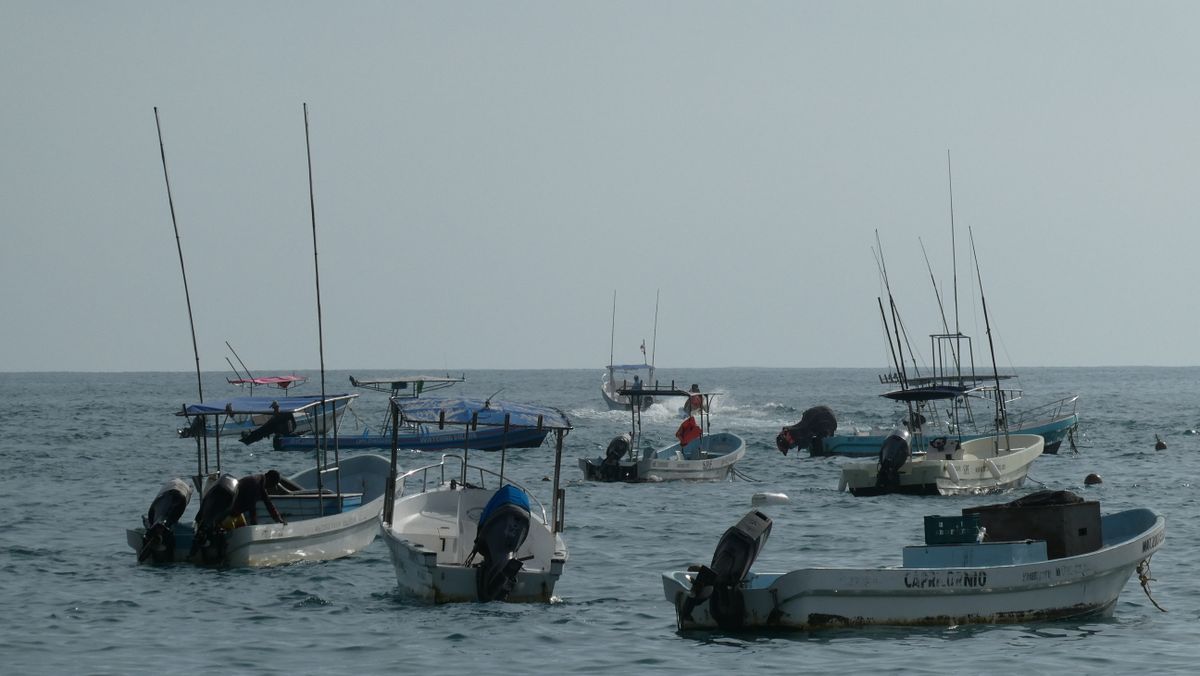
Here honesty is required: Cabo San Lucas is, alongside a handful of other places on earth, the sport fishing capital for marlin and dorado. The Sea of Cortez — nicknamed "the world's aquarium" by Jacques Cousteau — combined with Pacific currents converging at the tip of Baja creates a concentration of trophy fish that is genuinely hard to match anywhere else. Striped marlin, blue marlin, dorado (mahi-mahi), yellowfin tuna: the species list and catch density make Cabo a bucket-list destination for serious anglers. International fishing tournaments put Cabo on their calendar for a reason.
Tulum's Caribbean waters are good for reef fishing, snapper, barracuda, and some offshore trolling — but the Caribbean off the Yucatan Peninsula is not prime billfishing territory. If big-game sport fishing is the primary reason for your trip to Mexico, Cabo wins this category outright and Tulum is not the right call.
Snorkelling and Diving: Tulum Wins
The Mesoamerican Barrier Reef — the second-longest coral reef system in the world — runs along the entire Caribbean coast of Mexico, passing right by Tulum. That means coral gardens, reef fish in extraordinary variety, sea turtles (Akumal, 30 minutes north, has wild green turtles swimming directly with visitors year-round), and some of the clearest water on the planet. Add the cenote diving — underwater cave systems that attract technical divers from across the globe — and the underwater offering around Tulum is world-class across two completely different environments.
Cabo has good snorkelling and diving in the Sea of Cortez, with excellent marine diversity including sea lions, rays, and reef fish around Cabo Pulmo (a UNESCO marine park about 100 km east). But the cenote experience simply doesn't exist, and the Caribbean reef accessibility from shore that Tulum offers is hard to replicate.
For snorkellers and divers, Tulum holds a significant advantage.
Food: Tulum's Organic Scene vs Cabo's International Menus
Tulum has developed one of the most distinctive food cultures of any beach destination in Mexico. A strong vegan and organic movement has taken root alongside a generation of serious chefs who use locally sourced jungle and coastal ingredients. You'll find: open-air palapa restaurants where fresh catch is prepared simply and brilliantly, Tulum Pueblo taco stands that draw long queues of locals after midnight, the night market at El Camello for grilled meats and regional plates, and a strip of upscale jungle restaurants in the Zona Hotelera that would not feel out of place in Mexico City. Eating in Tulum is a genuine experience at every price level.

Cabo has excellent restaurants. But it's fundamentally an international menu oriented to American taste: premium steaks, sushi, designer cocktails, upscale chains. Well-executed and expensive. What it lacks is the organic regional identity that Tulum's food scene carries. If cuisine and food culture are an important part of your travel, the Caribbean side wins this round.
Nightlife: Cabo Is a Different League
In terms of volume and energy of nightlife, Cabo San Lucas has no equal in Mexico outside Cancún. The marina strip concentrates bars, clubs, and live music venues in a dense corridor. Names like Cabo Wabo (founded by Van Halen's Sammy Hagar), Squid Roe, and Nowhere Bar have been fixtures on the American party tourism circuit for decades. If you come to Cabo to dance, drink, and not sleep until 5 AM, the options are nearly unlimited.
Tulum has a very different nightlife energy: intimate jungle clubs with design aesthetics and curated music, beach bars that extend into the night along the Zona Hotelera, and a livelier local scene in Tulum Pueblo where bars and restaurants stay open late. It has produced its own distinct nightlife culture — more atmospheric, more selective, more focused on experience than volume. Some travelers find it more memorable than a conventional club scene. Others come specifically for Cabo's scale.
Price: The Gap Is Real
Cabo is one of the most expensive destinations in Mexico, full stop. Hotels in the tourist corridor compete on price with Caribbean and South Florida resorts. A decent room in high season can run $200–400 USD per night. Dinner at a mid-range marina restaurant: $50–80 per person with drinks. Activities — diving, fishing, kayaking — are priced for the high-spending North American traveler.
Tulum sits in a more accessible range. A comfortable room in Tulum Pueblo: $40–80 USD. A well-placed Zona Hotelera guesthouse or eco-lodge: $80–150 USD. Most of the best taco spots and local restaurants have main dishes between 100 and 200 pesos ($5–11 USD). Cenote entrance fees typically run 200–400 pesos. For budget travelers or for anyone who wants their money to go toward experiences rather than room rates, Tulum compares very favorably.
Our Tulum budget guide covers exactly how to stretch every peso.
Wildlife and Nature: Two Distinct Ecosystems
Both destinations have remarkable natural environments — but they are completely different in character.
Cabo San Lucas sits on the edge of the Sea of Cortez, one of the richest marine ecosystems on earth. Gray whales arrive between January and March to breed in the warm protected lagoons of Baja. Humpback whales also appear during this window. Sea lions, dolphins, whale sharks in season, and extraordinary bird life make the Sea of Cortez a world-class wildlife destination.
Tulum's natural world operates on a different scale and across more ecosystems. In the water: Caribbean reef fish and corals, sea turtles at Akumal year-round, humpback whales offshore from November through March (tours typically depart from Cancun and Isla Mujeres), whale sharks near Holbox and Isla Contoy in summer. On land: the Sian Ka'an UNESCO biosphere reserve — one of Mexico's most important — begins just south of Tulum, protecting mangroves, freshwater lagoons, tropical forest, jaguars, tapirs, and hundreds of bird species. A boat tour through Sian Ka'an is one of the most memorable natural experiences in all of Mexico.
Accessibility: Cabo Has an Edge, But Tulum Is Easy Too
Los Cabos International Airport (SJD) receives direct flights from dozens of US and Canadian cities — Los Angeles, Dallas, Houston, Chicago, New York, Denver, Seattle, Phoenix, and many more — with flight times of 2–4 hours. For American travelers wanting a quick, non-stop arrival, Cabo is hard to beat.
Tulum is served by Cancun International Airport (CUN), one of Mexico's largest and best-connected international airports, with direct flights from dozens of North American and European cities. From Cancun airport to Tulum, ADO buses run directly to Tulum Pueblo (about 2 hours), shared colectivo vans run along Highway 307, or private transfers take around 90 minutes. The Tulum International Airport (TQO) also now handles some direct flights. Access is genuinely easy — easier, in fact, than many travelers assume.
Our complete guide to getting to Tulum covers all the options in detail.
Who Should Choose Each Destination?
Choose Cabo San Lucas if…
- Elite sport fishing is your priority — marlin, dorado, tuna in the world's aquarium.
- You want a true all-inclusive resort experience with pool, spa, and every service without leaving the property.
- You're on a honeymoon and want luxury without logistical complications.
- Massive nightlife is a core part of your travel plan.
- You're a golfer — Los Cabos courses have a global reputation.
- Direct access from the US with very short flight times is essential.
- You have a high budget and want it spent on guaranteed resort comfort.
Choose Tulum if…
- Cenotes are on your bucket list — no other destination in the world offers this underground freshwater experience at this scale.
- You want to snorkel or dive on a world-class Caribbean coral reef.
- Ancient Mayan ruins and archaeological day trips (Cobá, Chichén Itzá) are part of your plan.
- You're drawn to a wellness, yoga, or eco-retreat atmosphere.
- You care about food culture and want a genuine local restaurant scene alongside creative dining.
- You prefer destinations with human scale and character over resort infrastructure.
- You're a diver, snorkeller, or nature traveler who wants diverse ecosystems including reef, cenotes, and biosphere reserve.
- You want a trip remembered for what you experienced and discovered, not what you consumed.
The Verdict
There is no better destination — there is a better destination for what you are looking for. Cabo San Lucas is an impeccable tourism product: expensive, accessible, polished, and calibrated for maximum comfort. If that is what you need, Cabo delivers it better than almost anywhere else in Mexico.
Tulum doesn't compete in that league and has no interest in doing so. It competes on the richness of its natural environment — cenotes, reef, ruins, biosphere — on the authenticity of its food and culture, on a wellness identity that has drawn serious travelers for two decades, and on the kind of experience that stays with you. For cenote lovers, divers, eco-travelers, archaeology enthusiasts, and anyone who wants Mexico beyond the resort formula, it is genuinely unmatched.
If you're leaning toward Tulum, start with our 4-day itinerary or explore everything the destination offers beyond the beach.
auto_awesome Continue exploring Tulum
You Might Also Like
 calendar_today Apr 29, 2026
 Tulum vs Cancun: The Honest Comparison
Two completely different Mexican beach destinations. One wins on accessibility, all-inclusives, and nightlife. The other
 calendar_today May 9, 2026
 Tulum vs Acapulco: Why the Caribbean Won
Acapulco was for decades the most glamorous beach resort in Mexico. Tulum is what grew to replace it — but on the opposi
 calendar_today May 6, 2026
 Tulum vs Mazatlán: Caribbean Jungle Meets Pacific City
Mazatlán and Tulum sit on opposite coasts of Mexico and offer completely different experiences. One has one of Mexico's